In the fast-paced world of construction, delays are the enemy. Whether it’s a sudden downpour, howling winds, or the mess of dust and debris, external factors can easily throw a project off schedule. This is where the benefits of scaffolding wrap come into play.
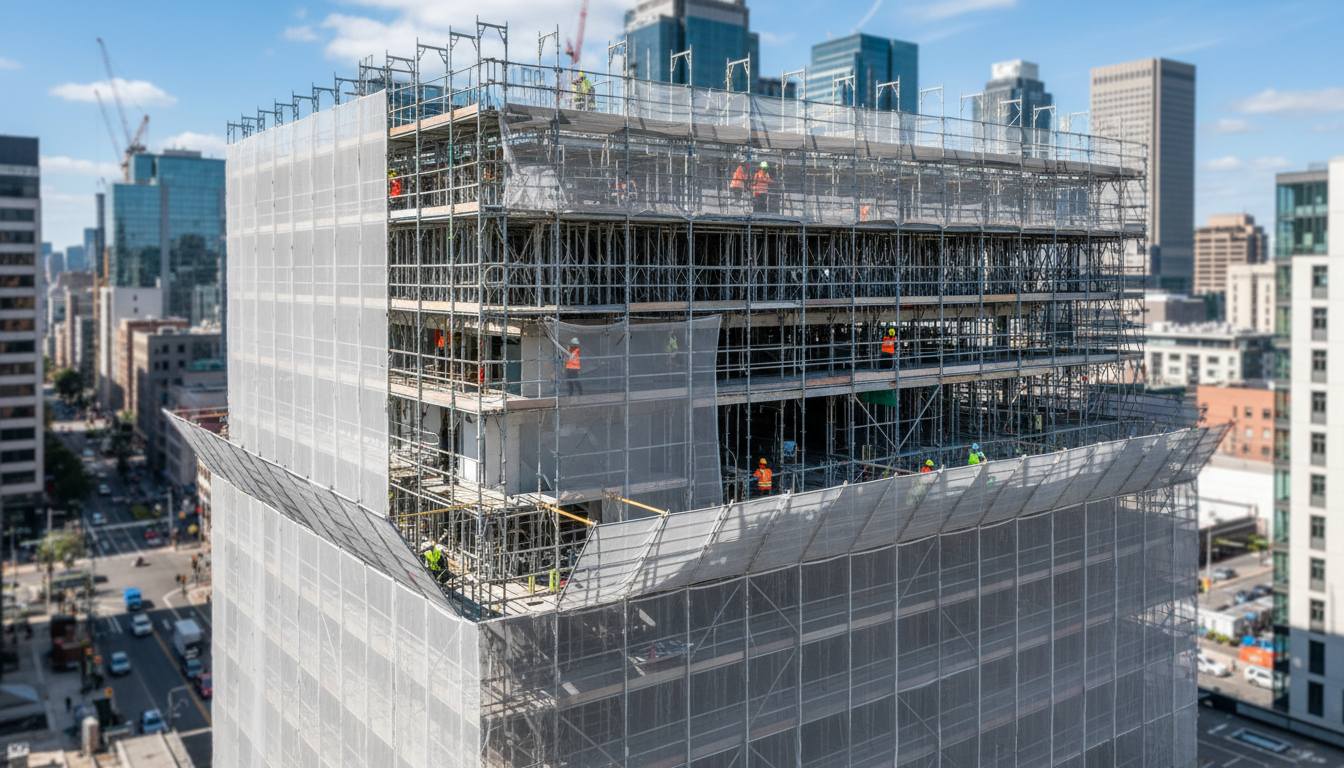
Scaffolding wrap is a heavy-duty, weather-resistant material—often made of shrink-wrap or reinforced polyethylene—that creates a seamless, drum-tight seal around a construction site. Its primary purpose is to provide uninterrupted weather protection, ensuring that rain, snow, and wind don’t stop your crew from working. Beyond weatherproofing, it significantly enhances on-site safety by containing debris, provides a professional branding platform, and creates a controlled environment for sensitive tasks like painting or asbestos removal.
If you’ve ever seen a building completely “cocooned” in white or branded plastic, you’re looking at a site that is saving time, protecting its workers, and likely staying under budget. Let’s dive into the specific reasons why this simple addition is a game-changer for modern construction.
1. Weatherproofing: Your Shield Against the Elements
One of the most immediate benefits of scaffolding wrap is its ability to turn an outdoor site into an indoor-like environment.
In many climates, construction is at the mercy of the forecast. Traditional netting might stop a few falling bricks, but it won’t stop rain from soaking your materials or wind from making it too dangerous to stand on a platform.
-
Continuous Workflow: Because the wrap is heat-shrunk to create a solid barrier, it keeps the interior dry. This means your team can keep working on bricklaying, plastering, or electrical installs even during a thunderstorm.
-
Temperature Control: In the winter, scaffolding wrap helps trap heat inside the structure (especially when paired with space heaters), preventing materials like mortar or paint from freezing and failing.
2. Enhanced Safety and Debris Containment
Safety isn’t just about the people on the scaffolding; it’s about the people walking underneath it.
On high-rise projects or urban renovations, a dropped tool or a gust of wind blowing dust can be a massive liability. Scaffolding wrap acts as a total containment system. Unlike loose tarps that can flap and tear, shrink wrap stays rigid.
-
Preventing Falls: It creates a clear physical boundary at the edge of the platforms, reducing the “vertigo” effect for workers and providing a last line of defense against falling objects.
-
Dust & Lead Abatement: For projects involving sandblasting or removing hazardous materials like lead paint or asbestos, the wrap ensures that toxic dust is contained within the site, protecting the local community and meeting environmental regulations.
3. Site Security and Privacy
Construction sites are unfortunately prime targets for theft and vandalism. A skeleton of open scaffolding is essentially a ladder for intruders.
Wrapping the structure provides a massive boost to site security. By obscuring the view of the interior, you hide expensive tools, copper piping, and machinery from prying eyes. If a criminal can’t see what’s inside, they are far less likely to risk breaking in.
Additionally, if you are working on a high-profile project—like a luxury hotel or a government building—the wrap provides privacy, keeping the “big reveal” for the opening day.
Comparison: Shrink Wrap vs. Standard Sheeting
Not all wraps are created equal. Choosing the right one depends on your project’s length and location.
| Feature | Standard Scaffold Sheeting | Shrink Wrap (Scaffold Wrap) |
| Fit | Attached with bungees; can be loose. | Heat-sealed; drum-tight fit. |
| Wind Resistance | Can flap or tear in high winds. | Aerodynamic; stays secure. |
| Durability | Best for short-term (1–3 months). | Best for long-term (6+ months). |
| Appearance | Can look messy over time. | Sleek, professional, and neat. |
4. Professionalism and Branding Opportunities
Let’s be honest: construction sites are usually eyesores. They are messy, loud, and disrupt the neighborhood.
Scaffolding wrap transforms that “ugly” site into a massive billboard. Many companies use the wrap to print high-definition logos, contact information, or even “trompe-l’oeil” images that show what the finished building will look like.
-
Public Relations: A clean, wrapped site shows the neighborhood that you care about aesthetics and safety.
-
Advertising: Instead of paying for a billboard across the street, you are using the real estate you already have to market your brand 24/7.
5. Environmental and Cost Efficiency
While there is an upfront cost to installing high-quality scaffolding wrap, the Return on Investment (ROI) is usually seen in the lack of downtime.
If a project is delayed by just five days due to rain, the cost of labor and equipment rental often exceeds the cost of the wrap itself. Furthermore, modern wraps are increasingly made from recyclable materials, meaning you can protect your project without leaving a permanent footprint in a landfill.
Pro Tip: When choosing a wrap, always look for Flame Retardant (FR) certifications. In many regions, this is a legal requirement for insurance compliance and fire safety on-site.
Summary: Is Scaffolding Wrap Worth It?
If your project is located in a windy area, involves hazardous materials, or has a tight deadline that can’t afford “rain days,” the answer is a resounding yes. The benefits of scaffolding wrap go far beyond just “covering a building”—it’s an investment in productivity, safety, and your company’s reputation.
By creating a controlled, secure, and professional-looking workspace, you aren’t just building a structure; you’re building a more efficient business model.